Email Variations for A/Z Testing
Email Variations for A/Z Testing
In this article:
Why do A/Z testing?
How to do A/Z testing?
How to clone an email variation?
Which email variation is working best?
How to stop sending an email variation that is not performing well?
Why Do A/Z Testing?
A/Z testing allows you to test multiple email copies and determine which performs best. Performance is measured by opens, clicks, unsubscribes, and most importantly, replies.
Pro tip: Using email variations also improves deliverability. Sending emails with different variations makes it harder for spam filters to identify and block your messages.
How to Do A/Z Testing?
A/Z testing is done by creating multiple variations of an email step.
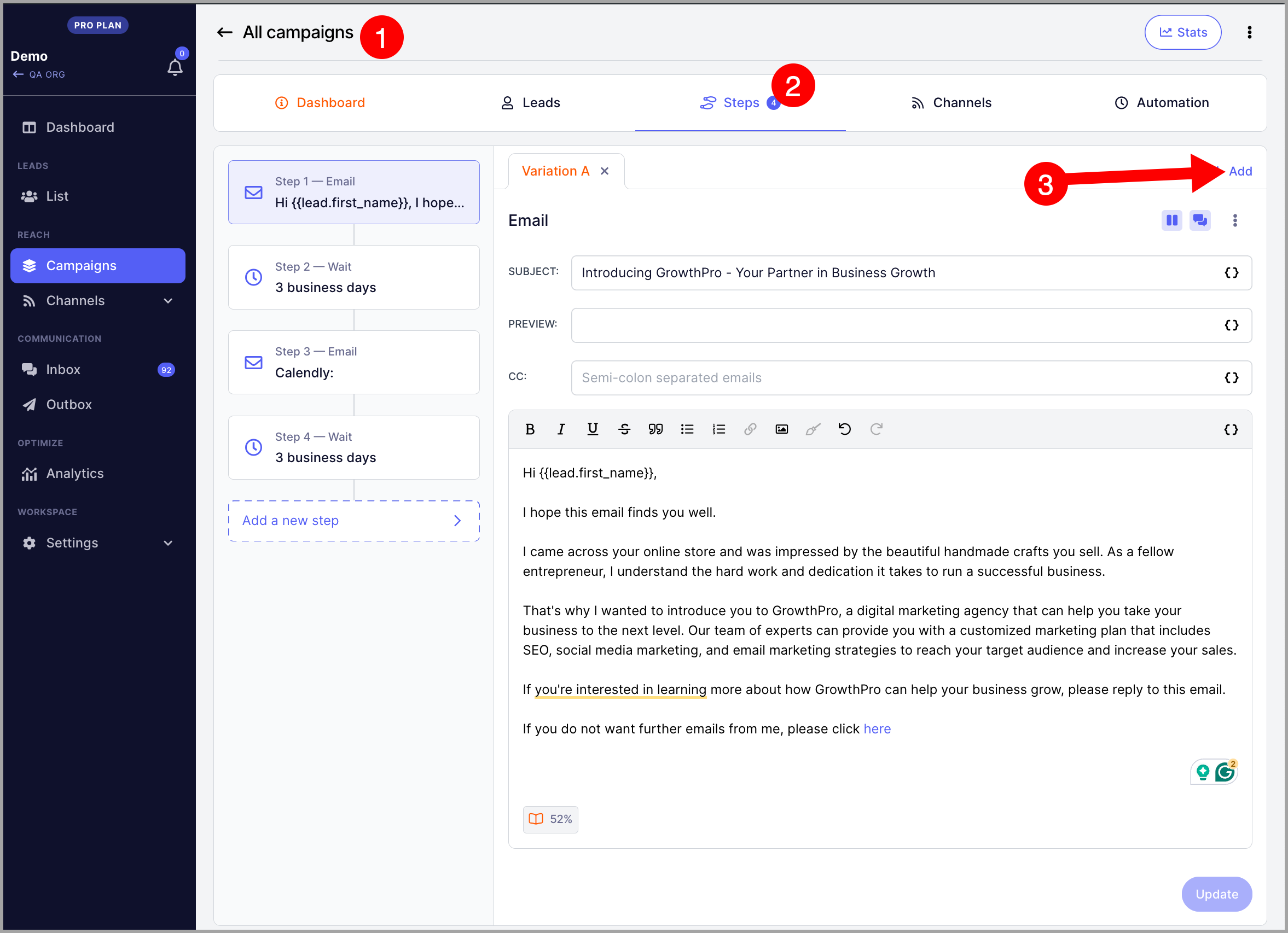
Step 1. Go to the campaign, open the email step, and click Add.
Step 2. Add the email subject and body → click Add.
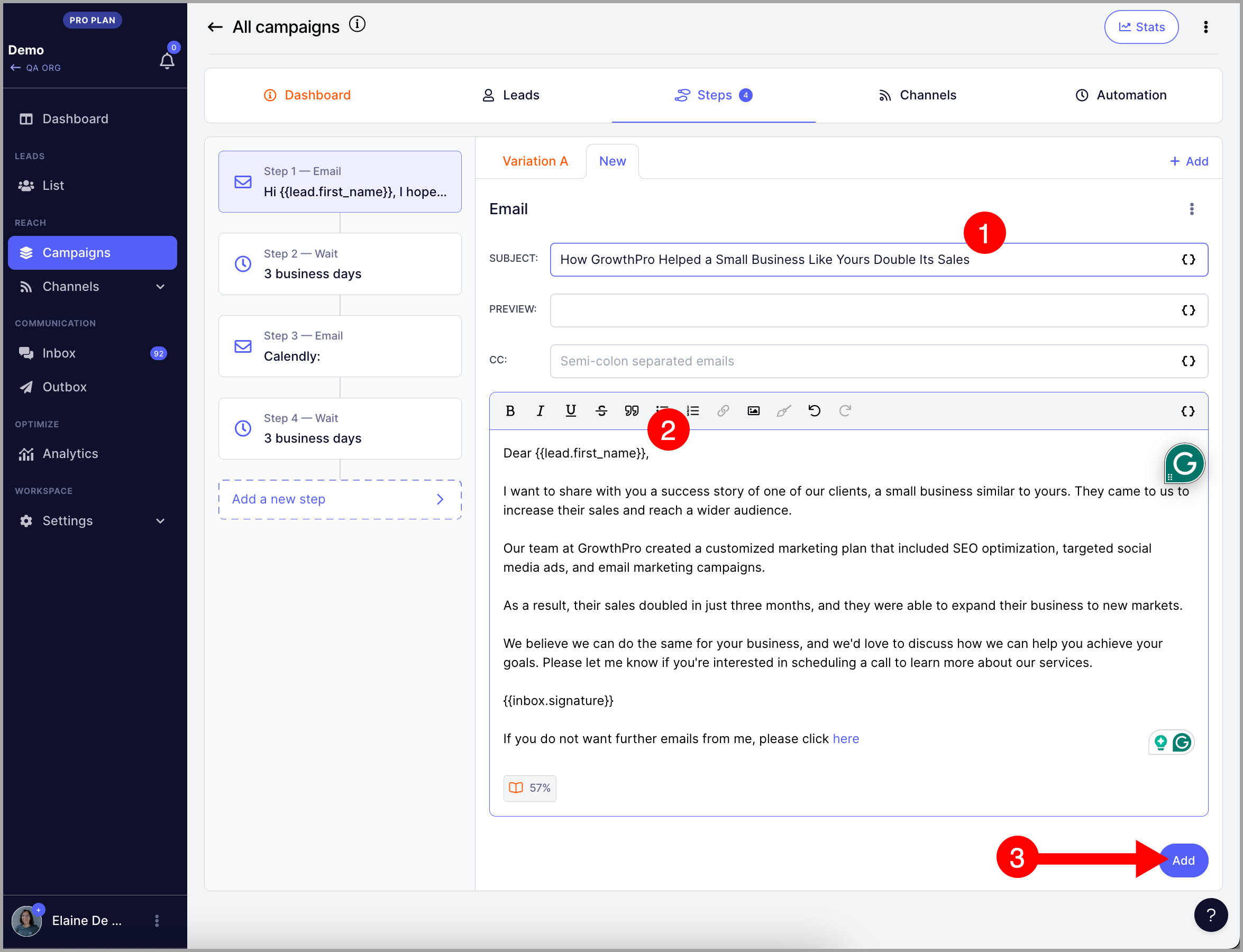
Note: You can add as many variations as needed to an email step.
How to Clone an Email Variation?
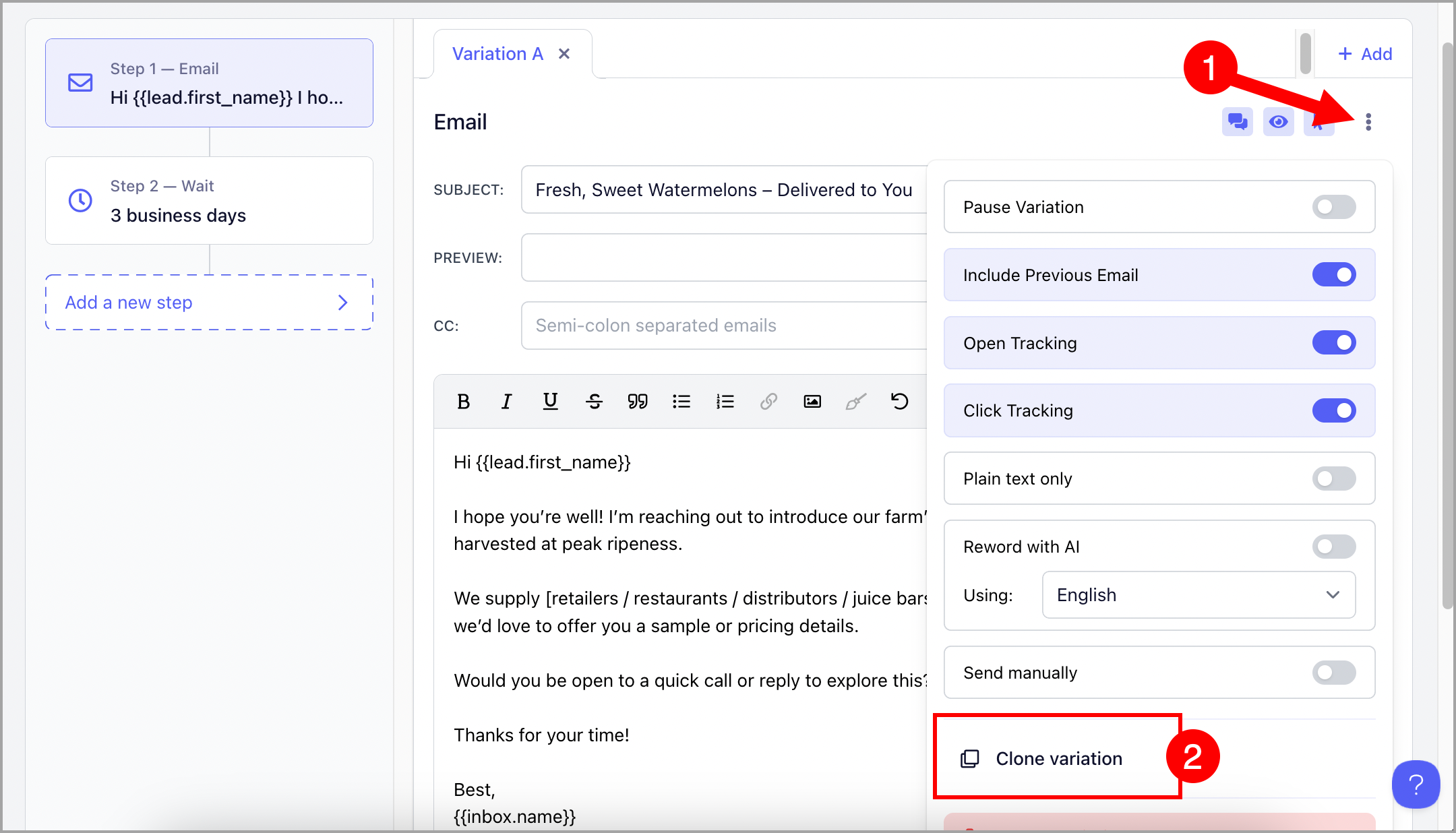
Click on the email step → click the menu icon (three vertical dots) → Clone Variation.
Which Email Variation Is Working Best?
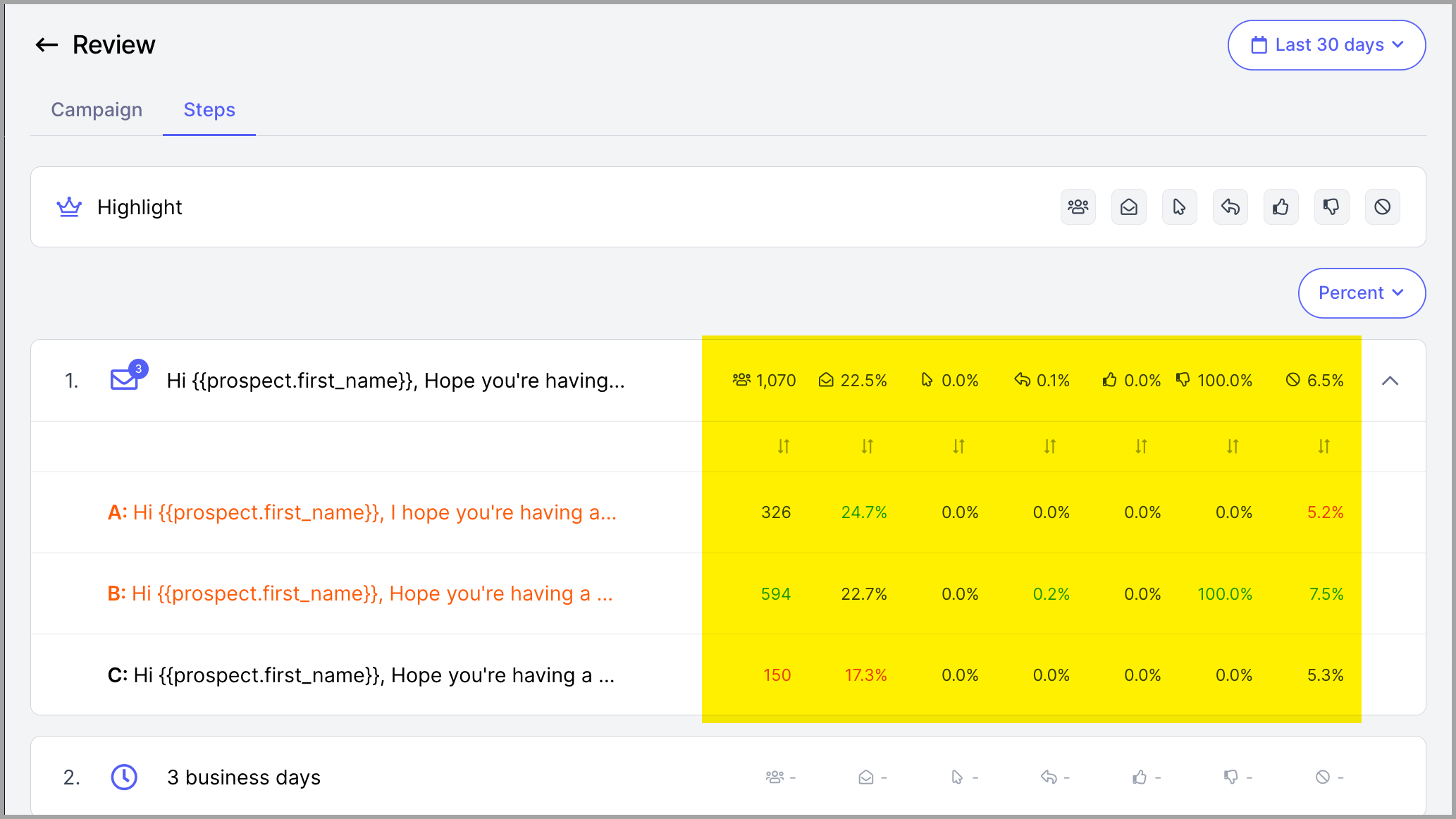
Each email variation has its own stats, which you can use to determine which copy is the most effective.
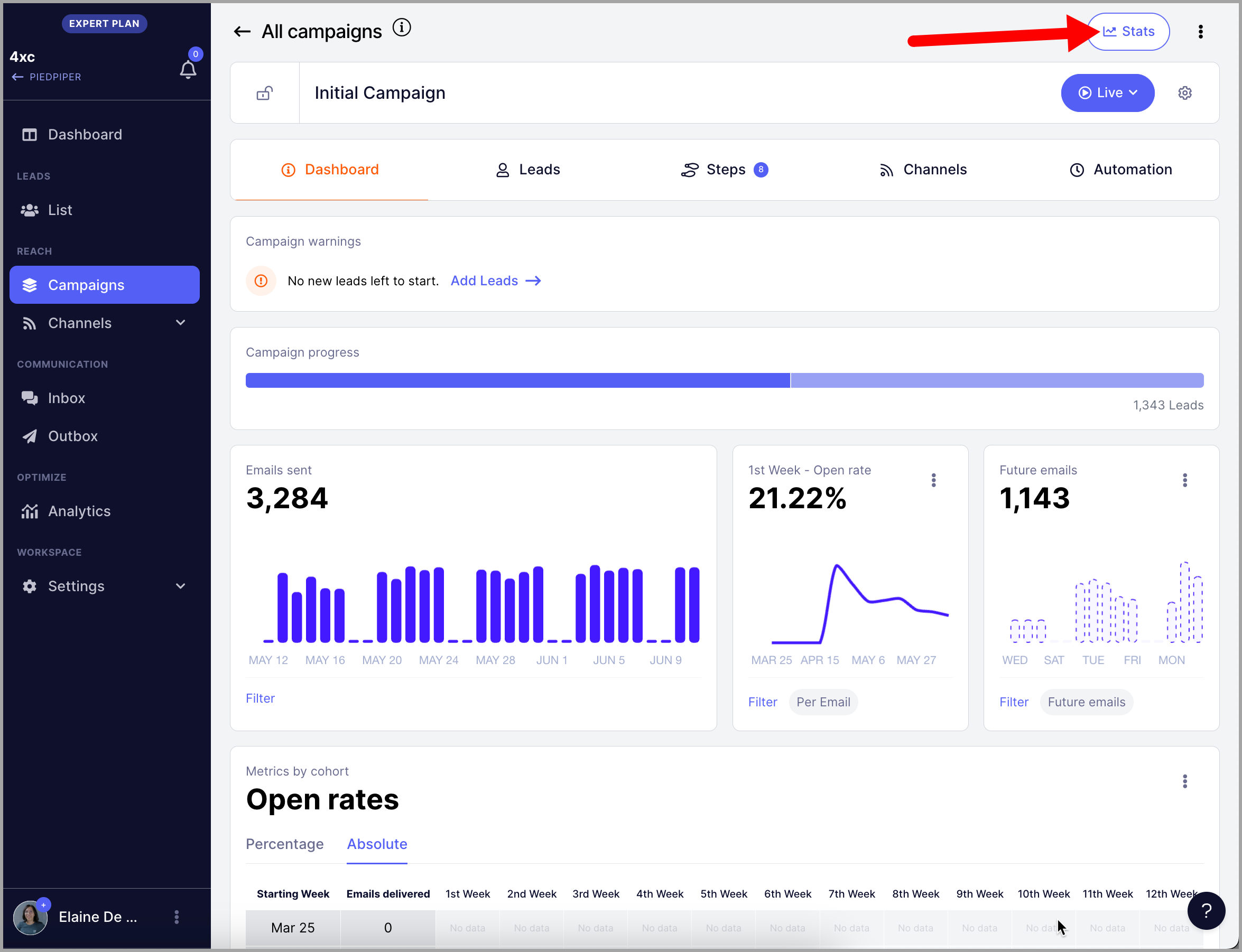
Step 1. In the campaign, click Stats in the top-right corner.
Step 2. Go to the Steps tab and click the down arrow on a step to see all its variations.
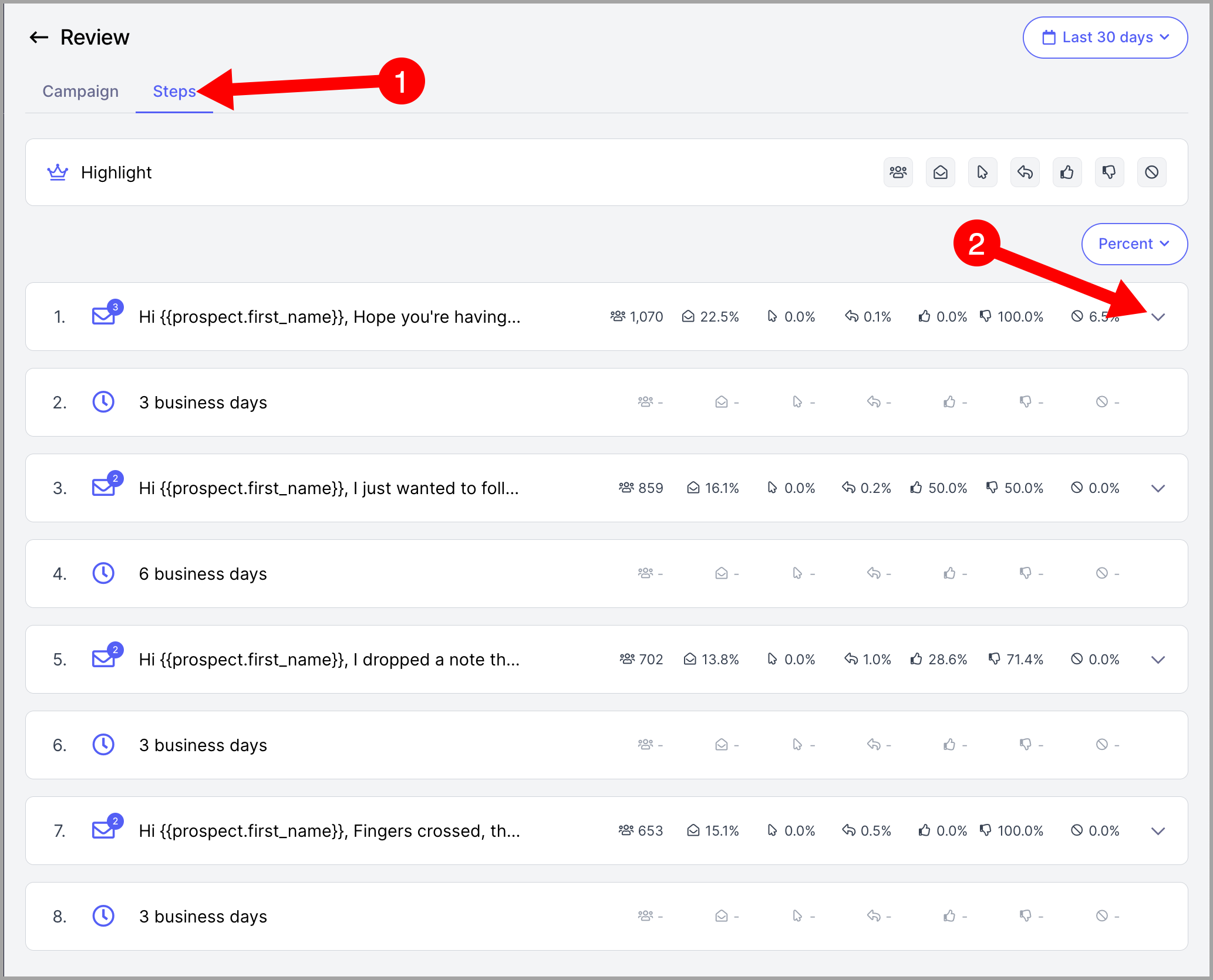
Here is an example of what it looks like:
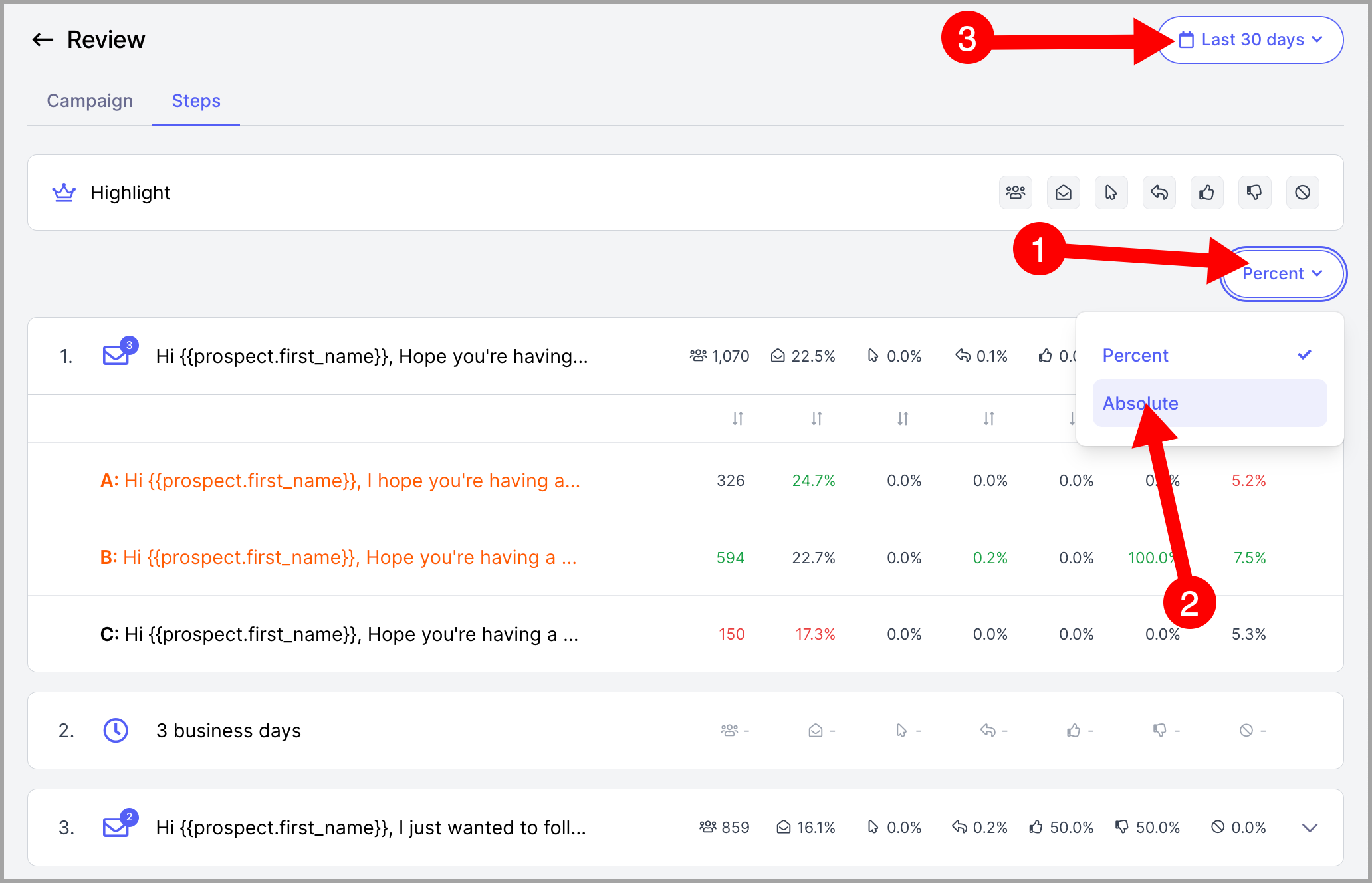
You can switch the view from percentage to absolute and adjust the timeframe using the options shown above.
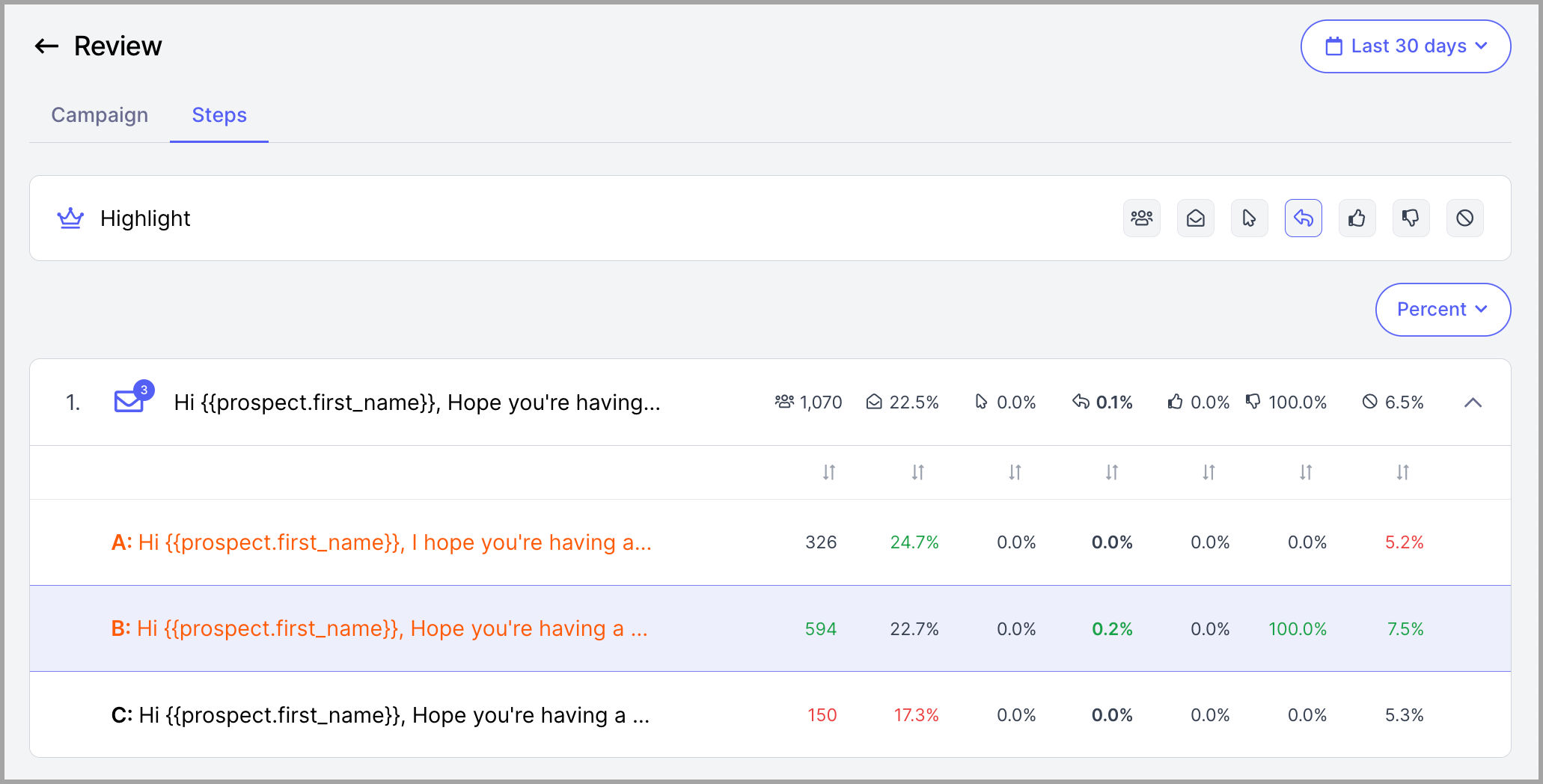
You can also highlight steps based on the stat you are optimizing for to surface more actionable data. Here is an example highlighting the best-performing step based on reply stats:
How to Stop Sending an Email Variation That Is Not Performing Well?
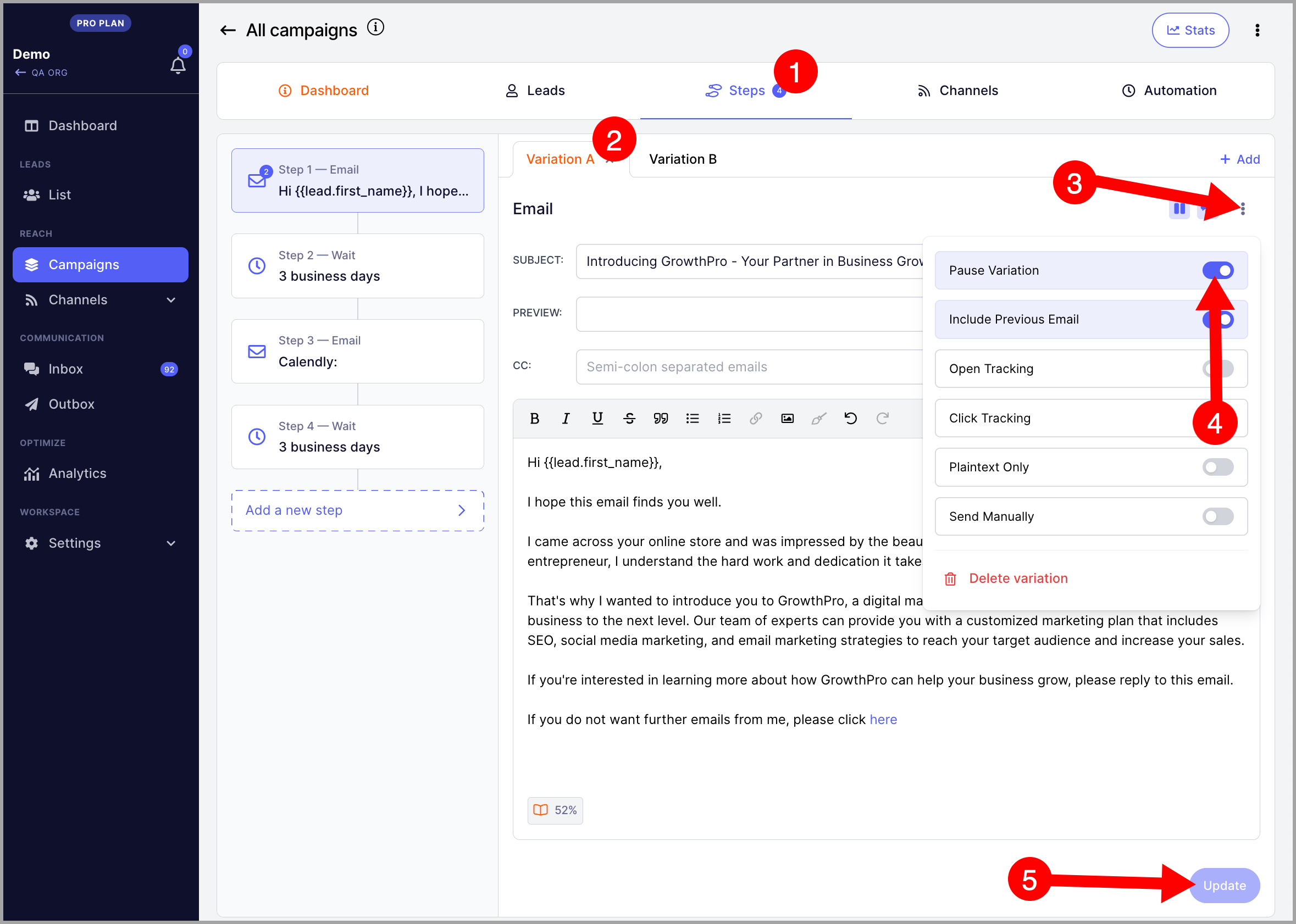
If an email variation is not generating replies, you can stop sending it by pausing it.
To pause a variation, go to the email step → click the menu icon (three vertical dots) → toggle Pause Variation → click Update.
Warning: Avoid deleting email variations. Doing so may cause active journeys to run into an error, preventing leads from receiving further follow-ups.